Saturday, September 22, 2012

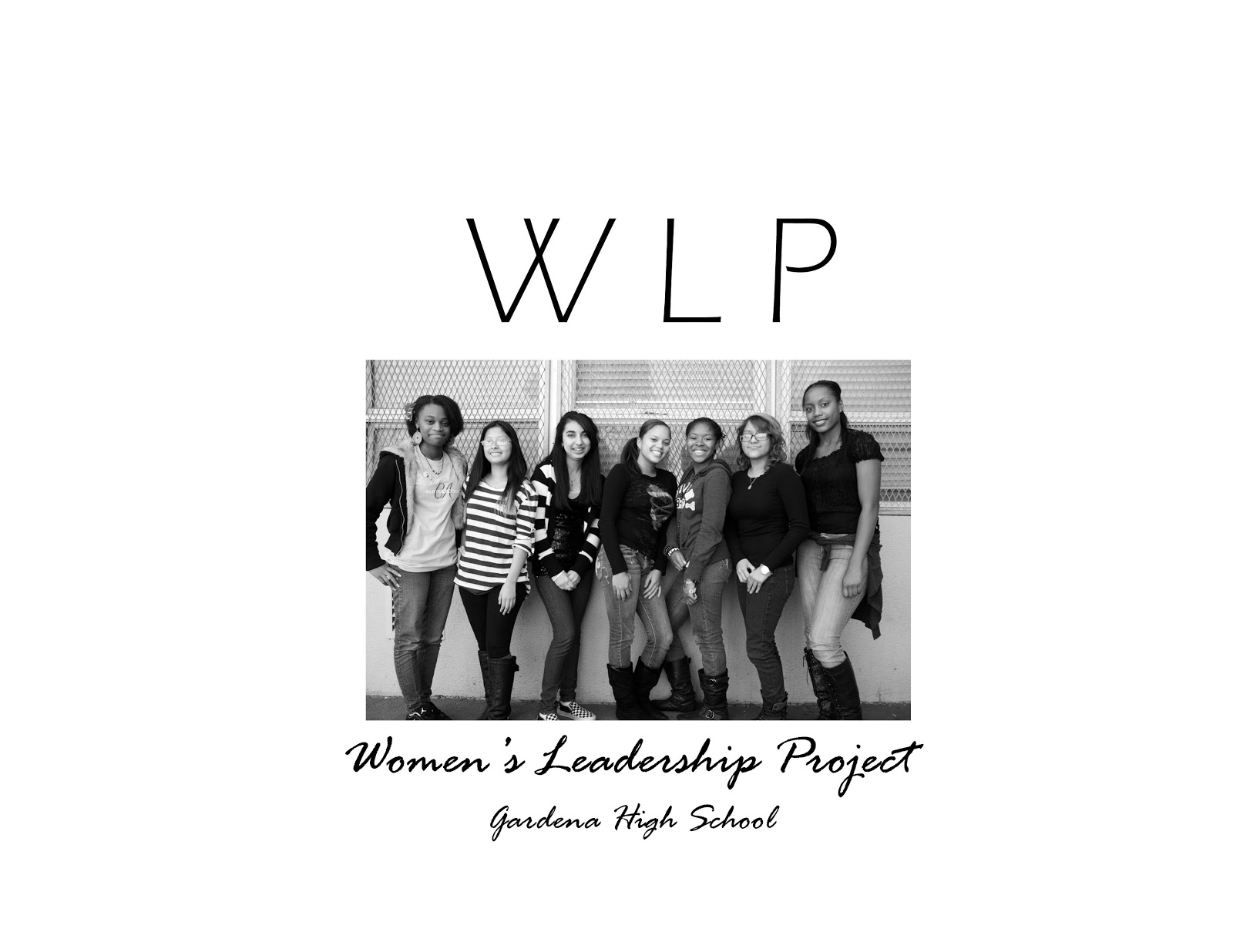
Dreamer Activist & WLP alum Lizeth Soria


Liz Soria, WLP alum
 
Hello Friends, family, and Allies:

Hope you've had a great summer.

My most exciting day so far was June 15th, when president Obama announced Deferred Action. Deferred Action is a progressive policy change that will grant undocumented youth the ability to work legally, obtain a Driver's License, and walk through our neighborhoods without fear of being deported for at least 2 years.

In California, we also have the California DREAM Act (which will allow undocumented youth to access financial aid) going into effect in January 2013.

While these are huge and exciting steps for undocumented youth, Deferred Action may be revoked if President Obama doesn't win a second term and the California DREAM Act only allows undocumented students to access funds that are left over after citizens and residents have been awarded financial aid.

So, I have decided to do the next best thing and fundraise my college tuition by recycling and/or asking for donations. Last year I met an undocumented college student at UCLA who fundraises over $2,000.00 each semester by recycling cans and plastic bottles--so I know this is  something I can accomplish, especially with your help.

Can you help me get to college by thinking green and recycling?

THE PLAN:

Aside from collecting cans and bottles on my own, I am asking my friends, allies, and family to collect your own recyclables on my behalf.

I will collect your cans and bottles the last Saturday of each month.

Or, if you want me to stop by your home or work earlier that that, please call me at 424-731-6953 or email me at lizeth.soria@aol.com

If you don't have cans or plastic bottles you will and you would like to help me I am more than happy to accept donations.

Please let me know if you can make donations for $15 or more.  I will be very grateful to you.

Thanks,

Liz Soria

Lizeth Soria
lizeth.soria@aol.com
 
Lizeth's Blog
 

WLP Fall Speaker Series: Devin Waller, Planetary Geologist


Women of color are severely underrepresented in the Science, Technology, Engineering and Mathematics (STEM) fields. In 2008, African Americans who’d received Science and Engineering doctorates were only 4% of the faculty at U.S. colleges and universities. At Cal Tech, one of the leading science and technology institutions in the country, African Americans are less than 1% of the faculty. They are 4% of the faculty at MIT. African American students are also underrepresented in the key Advanced Placement and college preparation science classes they need to gain admission to a four year college or university.
On October 9th and 17th planetary geologist Devin Waller (B.S., Physics, UCLA, M.S. Planetary Geology, Arizona State University) will join WLP students at Washington Prep and Gardena High Schools to discuss her path as a budding scientist in a white male-dominated field. Ms. Waller will introduce students to the field of planetary geology and explore the barriers that keep young women of color from pursuing STEM degrees and careers.


Tuesday, June 26, 2012

Ten Impact Micro Awards for Women's Leadership Project


WLP Scholarship Winners

The Los Angeles Urban Policy Roundtable announced the award of ten Impact Micro Awards to students in the Women’s Leadership Project on Wednesday, June 27. The ten student recipients have been accepted at colleges locally and nationally. The awards will help defray college expenses. The awards will be presented at the organization’s annual recognition luncheon Friday, June 29. The Impact Micro Awards are part of our Building Self-Sustaining Communities Initiative. The initiative aims to support organizations that have a proven track record of commitment to building community sustainability projects, activities, and service. The awards are given monthly. Wells Fargo Foundation is a major partner with the Los Angeles Urban Policy Roundtable’s Impact Micro Award Program. WLP's mission, work and accomplishments are spotlighted on the Los Angeles Urban Policy Roundtable website: http://www.laupr.org/

Friday, June 15, 2012

Twice Towards Justice


By: Karen Carrillo- 11th grade, Washington Prep.

"Another time i had to go to the optometrist downtown. My dad and I got to the office early- I was the very first patient. There was only one chair in the waiting room. The doctor told us to leave and come back at the end of the day. I didn't understand why until I overheard my dad telling my mom when we got home. The optometrist wasn't gonna let me sit in that chair until all the whites had sit in it first. He knew no white patient would ever sit in a chair that he's seen a black sit in." (pg17)
  .
I chose this passage because it's ridiculous how they arrived at the doctor early and had to come back until all of the other patients had sat on the chair. Wouldn't the white people have to sit in that same chair the day after she sat on it? The advice that I would give to a young girl of color growing up in this community 100 years from now is to never give up and always keep fighting for what they believe is right. They should never give up because at the end of the struggle they might accomplish their goal. What I didn't know that I know now before I took this class is that women face a lot of challenges in their daily life, some choose to put up with it meanwhile others fight to hear their voices heard or to keep up with the rest of the world. Many choose to keep silent due to intimidation or because they simply don't want to be judged by the rest of the people. I also learned about HIV within  the young people of color like that Latina women are discouraged to tell their partner to use protection because of machismo and their culture. Some of the many things i also learned in this class is about today's feminism with young women of color, Denim Day, sexual harassment among youth, women remaining docile and subservient like in the movie Real Women have Curves, and stereotypes that people have about other races. I would still like to learn about the women who have been through struggles and have spoken out about it. Are they helping other women face their every day life or are they just happy that they helped themselves. I would also like to learn about people who have fought to make a change in the world and have either failed or succeeded... How did they feel when they were going to take the challenge? Was it emotional for them at a certain point? At the end of the day someone somewhere is fighting to overcome an obstacle and hopefully they get to where they want to.


Thursday, June 14, 2012

What Shaped My Life: Claudette Colvin, Twice Towards Justice


By Vanessa Lopez
Claudette narrates her life looking back as an adult. Many life changing and important events occurred in her life that shaped who she is now in life.  Now its my turn to look back at my life and decide what things shaped my life.  Growing up it was hard for me because I did not grow up with my family.  I  grew up with my uncles.  They took care of me.  You might ask yourself why wasn't I sent to my parents?My dad worked out of state and he could not take care of me.  My mom was illegal and for that case she could not be with me.  Even though I was small I understood my parents' situation and I knew that what they where doing was to give me a better life.  Now I am 19 and I look back at the things that happened to me as a child and I know these things that happened made me stronger and independent. I learned that every thing that happens to us helps shape who we are in the future. I believe that if people go back to their childhood/teenage years they will find what shaped them.

Inspires ME


By Olivia Christon, 12th Grade, Washington Prep H.S 

In the book “My Sister’s Voices” Lisbeth Pelayo, 16, writes in the article "Racism":

"You also get stereotyped, such as when I went to my cousin’s house. Her friends were there, and they were white. When they saw me, they immediately started to ask me questions like what gang I was in. I said, 'What? I’m not even in a gang.' They said, 'oh, sorry.' But they were still afraid of me because I told them I go to school in East L.A. I felt put down a little, but it didn’t matter to me because I don’t really care what a bunch of white girls think of me, as long as my family and I know it’s not true. That’s all that matters."

I chose this passage because I understand where she's coming from. I go to Washington Prep H.S and when I talk to someone new they ask me what school I go to and when I say Washington Prep they assume the worst. They say you go to that trash and violent school where they always get into fights during school functions like games.

Some advice I would give to a young girl of color growing up in her community 100 years from now is do not be influenced by peer pressure.  I don’t care what people say about you as long as you know what the truth is.  And if a guy says the words, “but if you loved me you would," run in the other direction. Don’t walk, run.

What I did not know before taking Women of Color in the U.S class is that the main stereotypes for African Americans used by whites are Sambo, mammies as women who are overweight, very dark-skinned, middle age, loyal servants, very happy, and loud. Pickaninny is a derogatory term for black children, and coon plays to the dated stereotype of a black fool for an audience, particularly including whites. What I'd like to learn more about is why Native American women have a higher percentage of sexual assault.